Health and Safety Policy for Millbank Storage
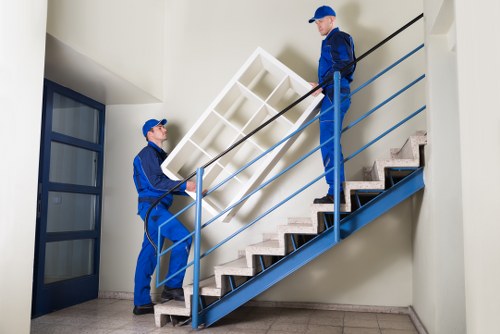 Millbank Storage is committed to maintaining a safe, secure, and well-managed environment for everyone who uses or works around our storage facilities. This health and safety policy sets out the principles, responsibilities, and standards that support safe day-to-day operations. Our approach is based on prevention, awareness, and prompt action, with the aim of reducing risk while protecting people, property, and operations.
We recognise that safe storage is not only about protecting goods; it is also about protecting staff, customers, contractors, and visitors from avoidable harm. For that reason, the Millbank Storage health and safety policy applies to all areas of activity, including site access, handling, movement, housekeeping, equipment use, and emergency readiness. Everyone is expected to act responsibly and to follow safe working practices at all times.
 Our policy is guided by a simple principle: hazards should be identified early and controlled effectively. We encourage a culture in which risks are reported without delay and corrective action is taken quickly. This means keeping shared areas clear, using equipment correctly, respecting restricted zones, and ensuring that any unsafe condition is addressed before it becomes an incident.
Responsibilities and Expectations
Safety is a shared responsibility. Management must provide suitable systems, training, and supervision to support safe operations. Employees and contractors must follow procedures, use equipment appropriately, and cooperate with instructions that protect health and safety. Customers and visitors are also expected to behave safely on site, observe posted notices, and avoid actions that could create risk for themselves or others.
Millbank Storage expects all individuals to report hazards, near misses, damage, and incidents as soon as they are noticed. Timely reporting helps us improve controls and prevents repeat problems. No one should ignore unsafe behaviour, blocked access, unstable items, spills, or defective equipment. Where necessary, work may be paused until the issue is resolved.
We also require a respectful attitude toward the workplace. Good housekeeping is essential to safe storage operations, so walkways, loading points, and shared spaces should remain orderly. Materials should be stacked securely, heavy items should be handled with care, and all activities should be planned to reduce strain, slips, trips, and falls.  In practice, this means thinking ahead and acting with caution rather than speed.
Risk Control and Safe Operations
The Millbank Storage safety policy supports a structured approach to risk control. Before carrying out tasks, staff should assess what could go wrong and choose the safest practical method. This includes using appropriate lifting techniques, checking access routes, and confirming that equipment is suitable for the task. Where a task introduces additional risk, extra controls must be put in place.
Personal protective equipment may be required for certain duties, and when it is issued it must be worn correctly and maintained properly. Protective clothing, gloves, safety footwear, or other approved items are part of the wider control system, not a replacement for careful behaviour. People must also avoid unsafe shortcuts and must not use damaged or unapproved tools.
Fire safety, emergency access, and incident response are key parts of this policy. Exit routes must be kept clear, fire precautions must not be obstructed, and everyone should understand what to do in an emergency. If an alarm sounds or an evacuation is instructed, the area must be left immediately and calmly, following the relevant procedure.  The same principle applies to any serious incident: protect life first, then report and support the response.
Training, Monitoring, and Review
Millbank Storage will provide suitable information and training to help people work safely and confidently. Training will be proportionate to the task and updated when duties, equipment, or risks change. Managers are responsible for reinforcing safe behaviour through supervision, routine checks, and clear communication. Health and safety is most effective when it is part of daily practice, not treated as a separate concern.
Monitoring is an important part of maintaining standards. Regular inspections, observations, and reviews help us identify trends and improve controls. If patterns of concern appear, we will investigate the underlying causes and introduce stronger measures where needed. This may include changes to procedures, maintenance schedules, signage, or workspace layout.
The policy will be reviewed periodically to ensure it remains suitable and effective. Feedback from incidents, audits, and operational changes will be considered during review, along with updates to best practice and legal obligations.  Our aim is to keep storage health and safety practical, consistent, and embedded across the organisation. By working together and remaining alert, we can maintain a safe environment that supports reliable service and responsible operations.